THE TWO GREAT COURTS
For centuries, Fae civilization has been divided between two great political and supernatural powers:
The Seelie Court, associated with spring and summer.
The Unseelie Court, associated with autumn and winter.
Although the two Courts have wildly different philosophies, neither can simply be described as either entirely "good" or "evil."
The Seelie are generally associated with growth, beauty, creativity, fertility, warmth, celebration, healing, generosity, and life.
The Unseelie are generally associated with decay, darkness, death, hunger, cruelty, winter, destruction, fear, and predation.
Yet individual Fae do not necessarily conform perfectly to the Court with which they are affiliated.
A Seelie Fae can be selfish, cruel, deceptive, or dangerous.
An Unseelie Fae can be kind, compassionate, protective, or genuinely loving.
The Courts represent broad philosophies and supernatural traditions rather than absolute moral alignments.
At the head of each Court sits an ancient Sidhe monarch.
The Seelie Court is ruled by a Sidhe Queen, while the Unseelie Court is ruled by an Unseelie Sidhe King.
Together, they possess enormous influence over Fae civilization, including Fae living within their own realm and those who have crossed over into the human world.
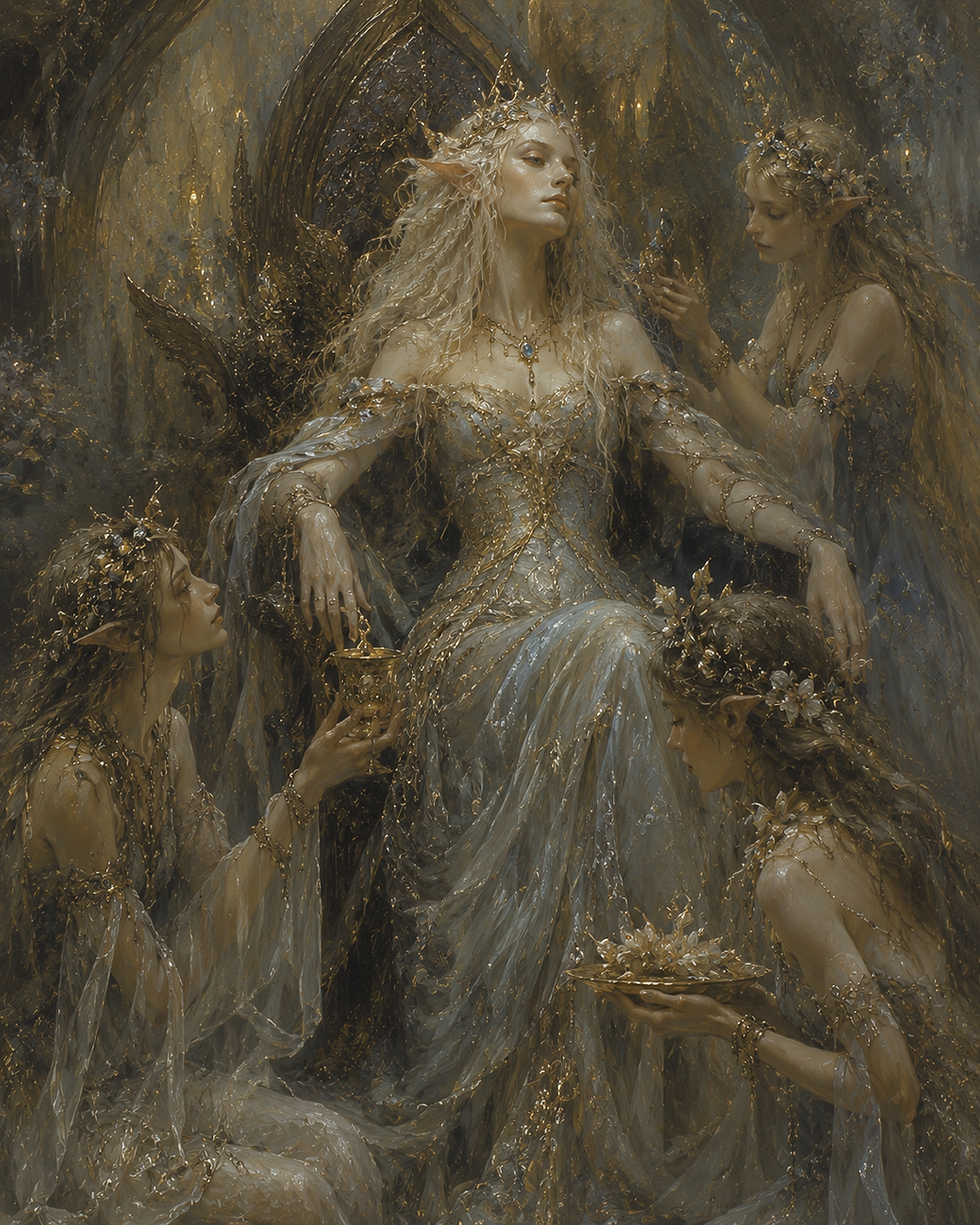
THE SEELIE COURT
The Seelie Court is traditionally associated with spring and summer, representing growth, fertility, warmth, beauty, creativity, renewal, celebration, and life.
Seelie Fae tend to have a greater affinity for the living world and often form particularly strong relationships with plants, animals, weather, art, music, and human creativity.
They are not necessarily benevolent.
A Seelie can still be extraordinarily dangerous.
Their kindness may come with conditions. Their gifts may carry unexpected consequences. Their promises may be technically truthful while deliberately leaving out important information.
THE SEELIE QUEEN'S VISION
The Seelie Queen has presented herself as a sincere advocate for peaceful integration between Fae and humanity.
Her vision is hopeful.
She believes younger Fae should have opportunities in the human world.
She believes Fae culture can enrich human society.
She supports cultural exchange.
She wants Fae artists to have opportunities.
She wants Fae communities to establish creative spaces, healing centers, educational institutions, and cultural organizations.
She believes humans and Fae can learn from one another.
Her vision includes:
Cultural enrichment. Creative collaboration. Education. Healing. The arts. Community. Opportunities for younger Fae and changelings.
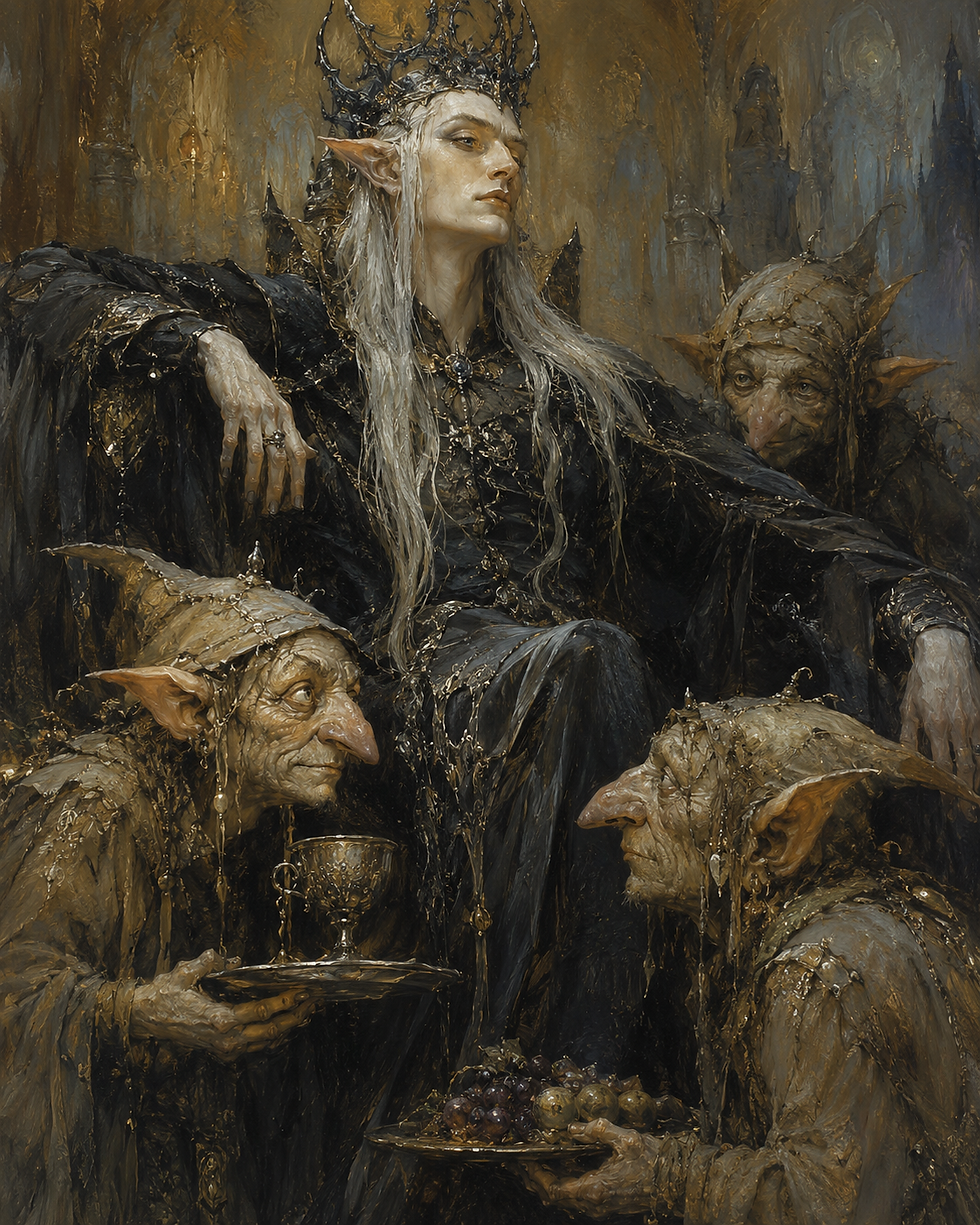
THE UNSEELIE COURT
The Unseelie Court is traditionally associated with autumn and winter, representing decay, darkness, hunger, death, destruction, fear, and the harsher aspects of nature.
Unseelie Fae are often more predatory and more willing to embrace the darker instincts of their supernatural nature.
They can be manipulative, ruthless, possessive, violent, and extraordinarily dangerous.
Yet even among the Unseelie there are Fae who genuinely love humanity.
The difference is that the Unseelie philosophy tends to view power, dominance, fear, and suffering as natural components of existence.
Where the Seelie might ask:
"How can Fae and humans coexist?"
The Unseelie may instead ask:
"Why should the Fae ever have to submit to humans?"
This philosophical divide has existed for centuries.
And now, it has come to Gravesbury Park.
THE UNSEELIE KING'S HIDDEN AGENDA
The Unseelie King publicly supports many of the same ideas.
He speaks of integration and opportunity.
He speaks of cultural exchange.
He speaks of Fae and humanity learning from one another.
But behind that public message lies something much darker.
The King does not truly envision equality between humans and Fae.
He envisions dominion.
His secret agenda involves exploiting humanity's emotional and physical vulnerabilities as resources for the Unseelie Court.
One of his most sinister plans involves the mass possession of vulnerable humans.
Individuals experiencing profound grief, rage, despair, hopelessness, or emotional trauma are particularly attractive targets.
The Unseelie seek to exploit these emotional states as openings through which possession can occur. Once possessed, humans may become servants of the Fae. Some are effectively treated as slaves.
Others may be exploited sexually or forced into degrading forms of servitude. The emotional suffering produced by these acts then becomes another source of supernatural energy, creating a horrifying cycle: Suffering creates power. Power enables more possession. More possession creates more suffering which creates more power.
The King seeks to turn humanity's pain into a renewable supernatural resource.
THE FLESH-HARVESTING CABAL
The Unseelie King's ambitions extend even further.
Certain Unseelie species are predatory in a very literal sense. They feed upon human biological matter.
Blood.
Flesh.
Organs.
Body parts.
For these Fae, human beings are not merely subjects or curiosities. They are food.
The Unseelie King himself belongs to one of the Sidhe lineages capable of feeding upon humans in this manner.
A secret cabal within the Unseelie Court therefore seeks to establish a reliable supply of human biological material to sustain the predatory members of their Court. This includes harvesting blood, organs, flesh, and other human remains.
The public-facing Unseelie political agenda deliberately conceals this objective.
To humans, the King speaks of integration.
Behind closed doors, his followers discuss humanity as a resource.